“The sensible rebel with rally roots… and a third row that occasionally hosts humans.”
Let’s get one thing straight right out of the gate: the 2026 Outlander isn’t trying to win a popularity contest. It’s not the default choice like a Toyota RAV4 or Honda CR-V, and it doesn’t have the same brand cachet as some of the segment’s heavy hitters. But what it does have is something arguably more important: a very strong, very logical case for why Canadians should give it serious consideration.
With Mitsubishi Motors now running a lean Canadian lineup consisting of the Mitsubishi Eclipse Cross, Mitsubishi RVR, and the Outlander, it’s clear where the focus lies. This is the flagship, and Mitsubishi is asking it to carry the brand. Thankfully, it’s up to the task.
S-AWC: The Real Reason You’re Here
Mitsubishi leans heavily on its Super All-Wheel Control system and for once, the marketing department isn’t overselling it.
At its core, S-AWC is a fully integrated system that combines:
Electronically controlled AWD (actively shifting torque front to rear)
Active Yaw Control (managing how the vehicle rotates through corners)
ABS, traction control, and stability control working together—not separately
For those wondering, “yaw” is simply the vehicle’s rotation around its vertical axis; basically, how it pivots when turning. The Outlander subtly uses braking and torque distribution to help you turn more precisely, reducing that familiar “push wide” feeling in corners.
What you end up with is a crossover that feels more planted and predictable than most of its rivals—especially in Canadian winters. And unlike many competitors, this isn’t an optional upgrade. Every Outlander gets it.
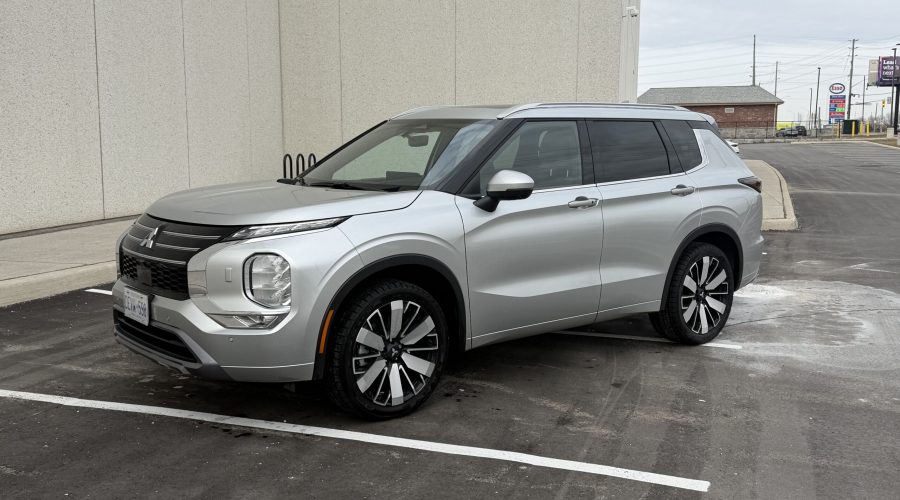
2026 Mitsubishi Outlander GT Premium - Front right
Pros & Cons of S-AWC
The Upside:
Excellent confidence in snow, rain, and mixed conditions
More composed cornering thanks to Active Yaw Control
Standard across the lineup (no upsell games)
Multiple drive modes to tailor behaviour
The Trade-Offs:
Slight hit to fuel economy compared to simpler AWD systems
Most drivers won’t fully “notice” it until conditions get ugly
Doesn’t turn the Outlander into a performance SUV (manage expectations)
In short, it’s one of those systems you don’t brag about—but you’re very glad you have.
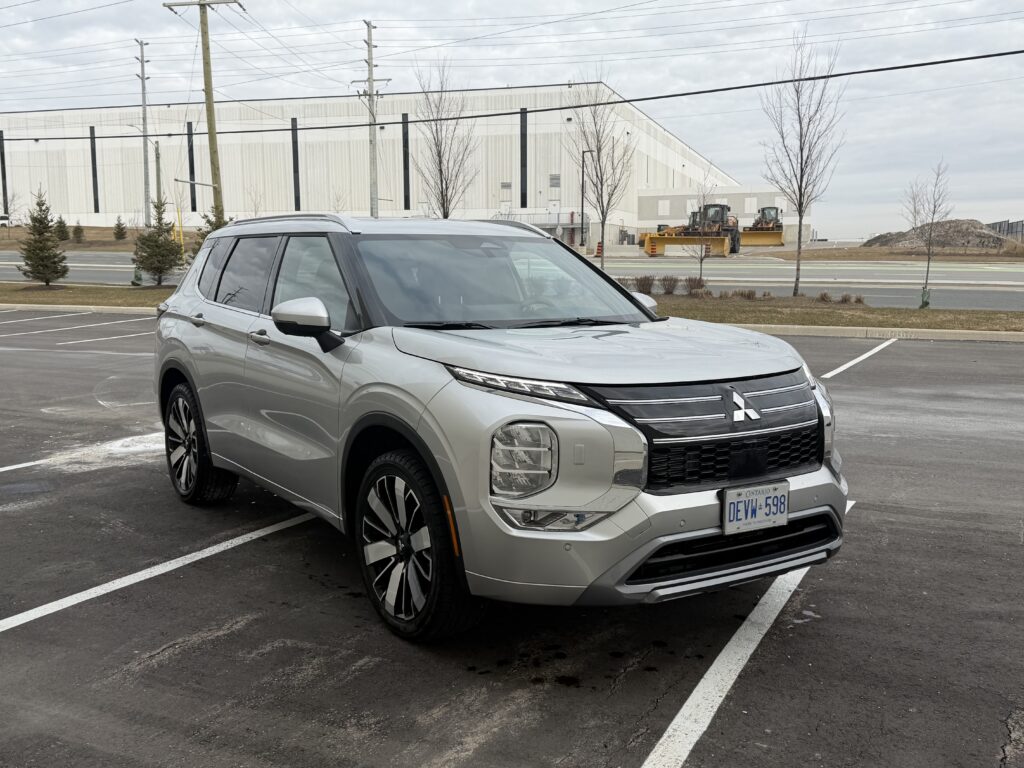
2026 Mitsubishi Outlander GT Premium - Front
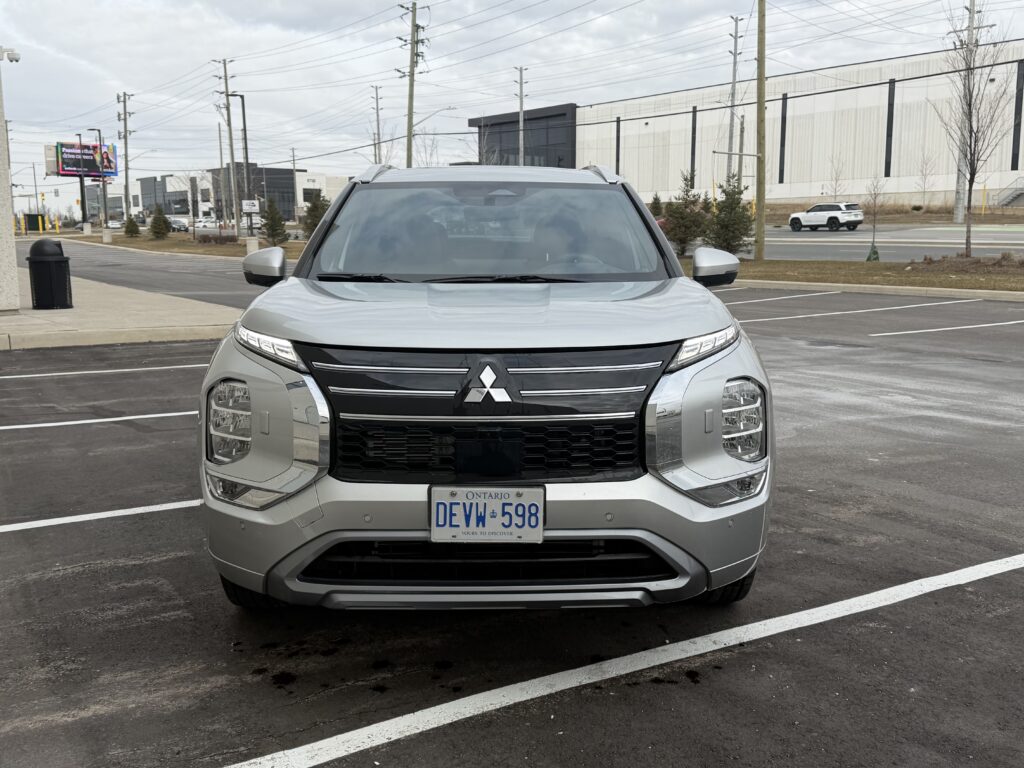
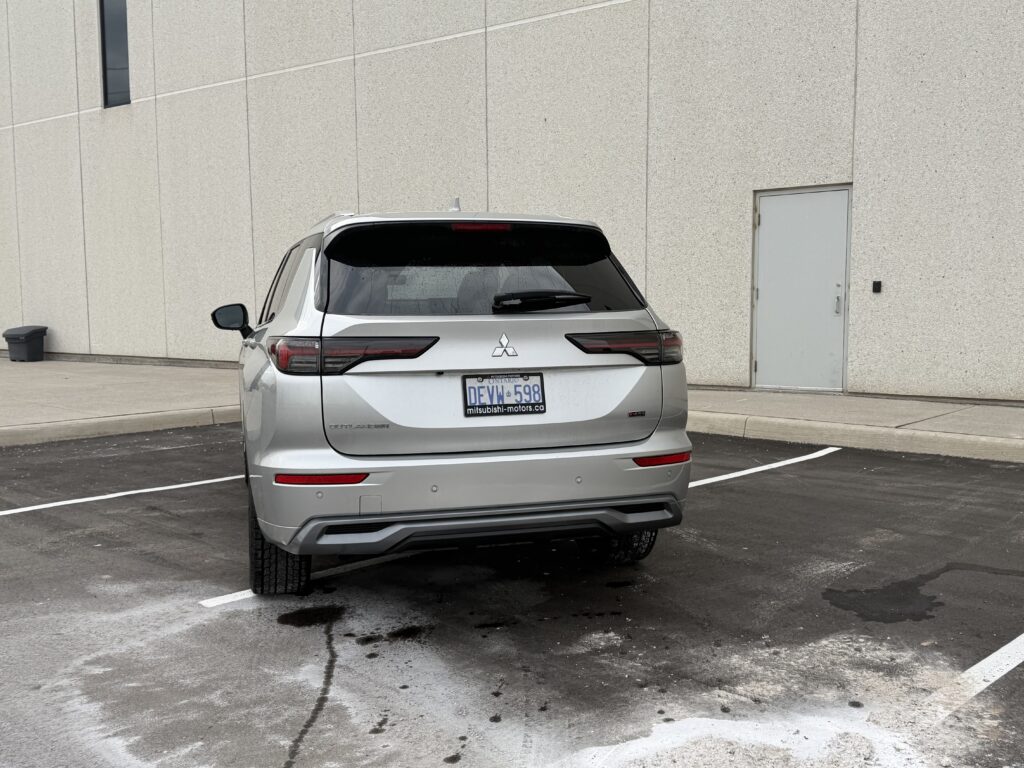
2026 Mitsubishi Outlander GT Premium - Rear
The Warranty: Mitsubishi’s Not-So-Subtle Flex
If S-AWC gets you interested, the warranty might close the deal.
Mitsubishi continues to offer:
5 years / 100,000 km comprehensive (bumper-to-bumper)
10 years / 160,000 km powertrain
That’s not just generous—it’s strategic. It tells buyers three things without saying a word: the company has confidence in its vehicles, it has real-world data to support offering this coverage long-term, and the competition simply isn’t matching it.
And they aren’t.
Let’s Talk About the Engine (Because We Have To)
Here’s where things get a little less impressive.
The 1.5L turbocharged four-cylinder engine is… fine. It’s not quick, it gets a bit vocal when pushed, and for something this small, it doesn’t deliver the kind of fuel economy you’d expect.
Real-world numbers tend to hover around:
9–10 L/100 km combined, depending on driving habits
With fuel prices pushing $1.80+/L in the GTA, filling the 55-litre tank becomes a $100 outing and the fuel gauge doesn’t exactly take its time getting back to “E.”
A slightly larger, less stressed engine—say a 2.0L or 2.4L—might have been a better match here. That said, once you settle into a normal driving rhythm, the Outlander is smooth, composed, and easy to live with. It’s just not going to win any stoplight drag races.
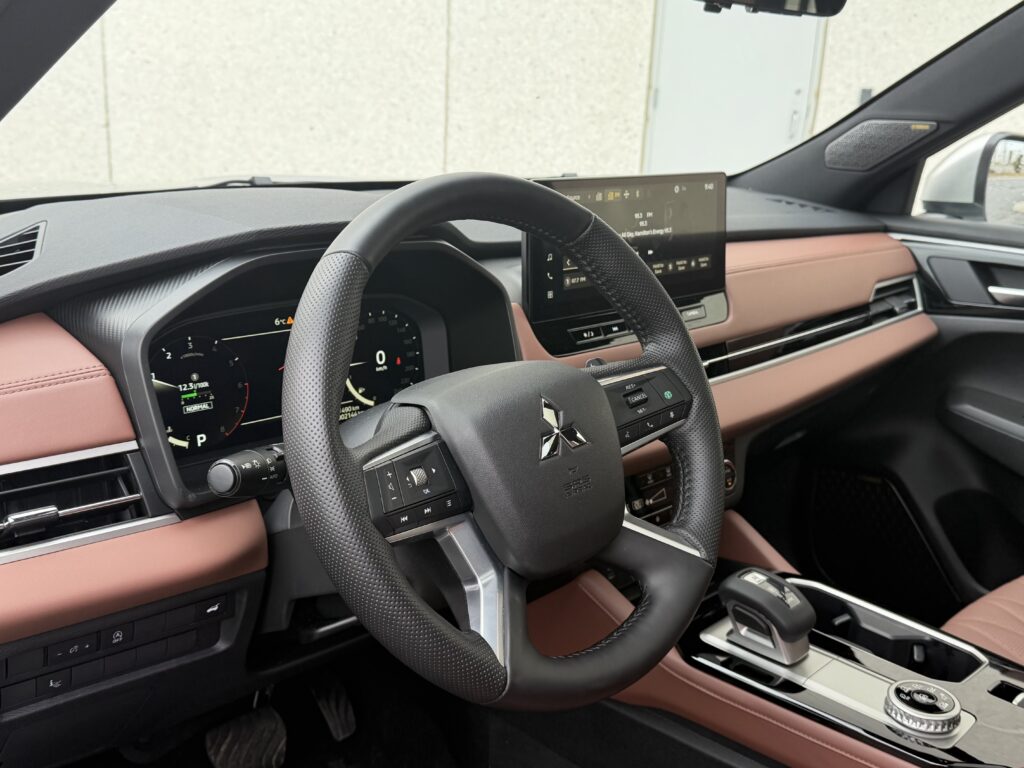
2026 Mitsubishi Outlander GT Premium - Front instrumentation
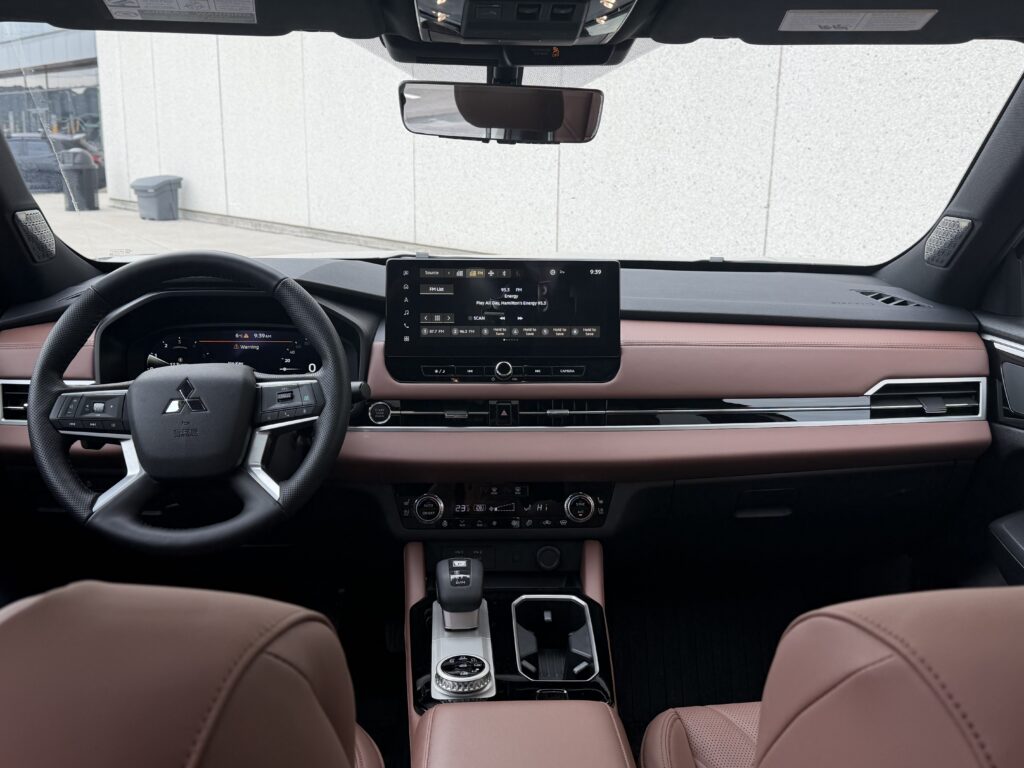
2026 Mitsubishi Outlander GT Premium - Front cabin
Interior, Tech & Driveability: No Real Weak Spots
The good news? Mitsubishi got most of the rest right.
The interior is well put together, with materials that feel more upscale than older Outlanders. The layout is clean, the infotainment system is intuitive (a rare win these days), and the overall driving experience is comfortable and composed.
It doesn’t feel like a step behind smaller competitors like the Hyundai Tucson or Mazda CX-5 anymore and that’s a big deal. The sound system delivers, the tech is easy to navigate, and everything works the way you expect it to.
Styling? It’s boxy—but so is everything else in this segment. Park it beside a Toyota Highlander or Honda Pilot and you’ll realize nobody’s reinventing the wheel here.
Trim Levels: Seven Feels Like a Lot
Mitsubishi offers seven trims, which feels… ambitious for a three-vehicle lineup.
More confusing is the fact that the GT S-AWC and GT Premium S-AWC share the same base price. This usually comes down to packaging differences; one may bundle certain features or styling elements differently but from a buyer’s perspective, it creates unnecessary complexity.
A little simplification here wouldn’t hurt and might even free up some budget for better brand awareness.
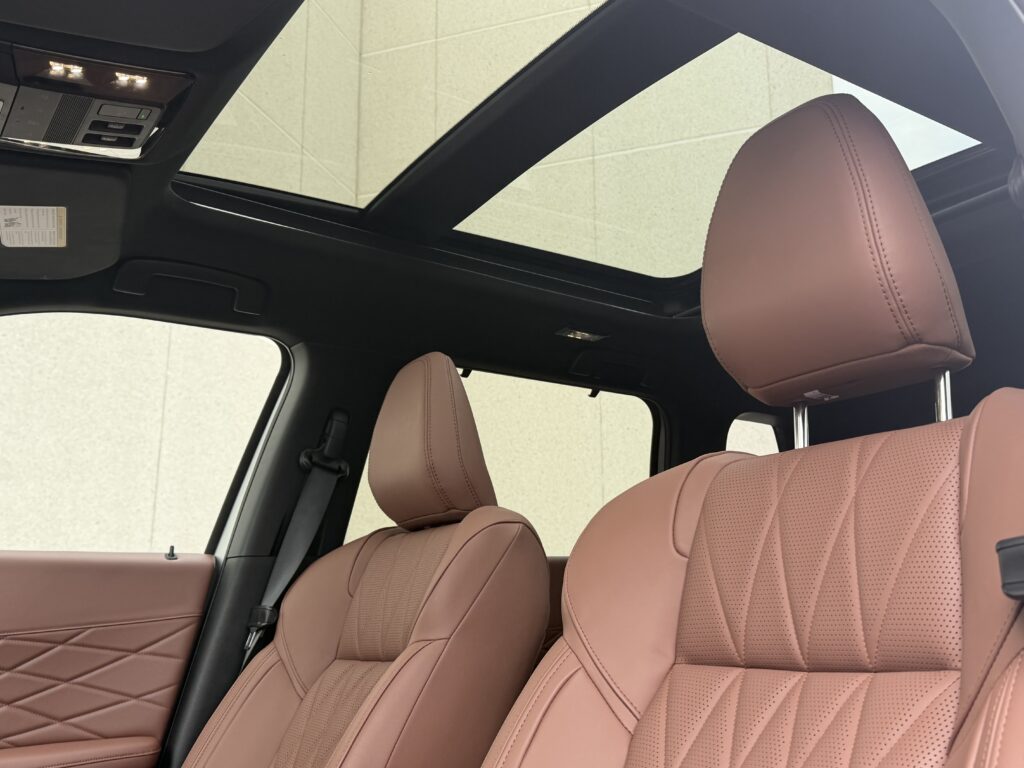
2026 Mitsubishi Outlander GT Premium - Front seats
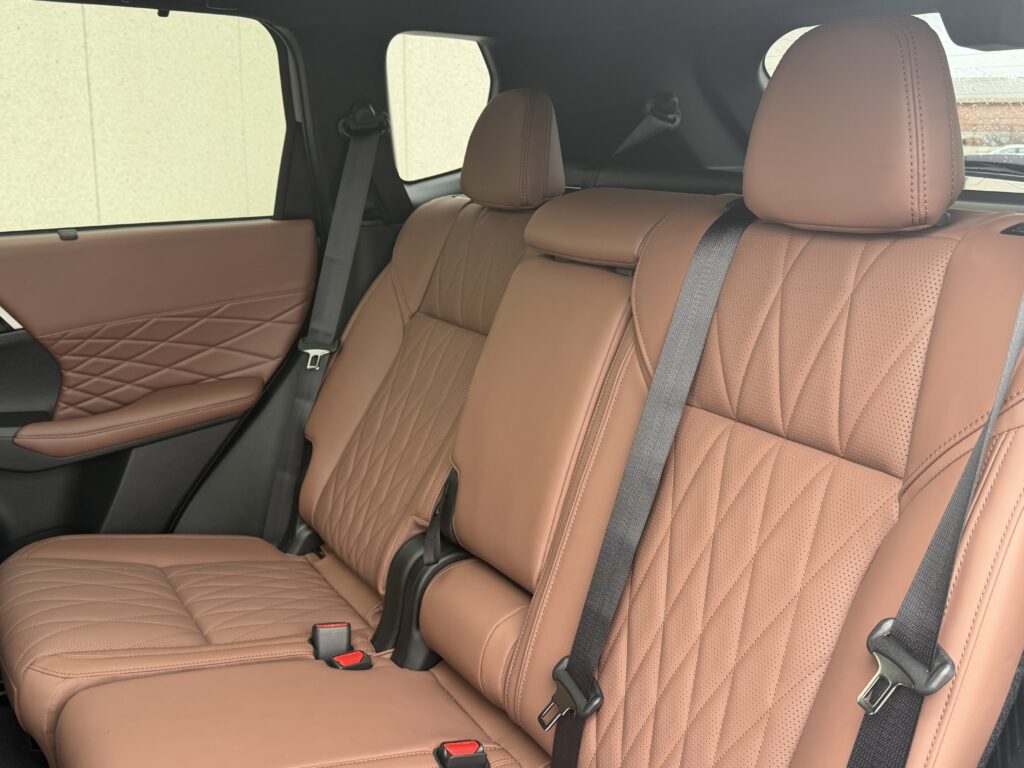
2026 Mitsubishi Outlander GT Premium - Rear seats
Pricing & Payments: Where It Gets Very Interesting
The tester came in at just over $50,500 all-in (pre-tax), which is a lot of SUV for the money—especially considering lower-than-average freight and paint charges.
From a payment perspective, it gets even better.
Through LeaseBusters, the Outlander leases at roughly:
$690/month (84 months, 3.99% APR) (assuming taxes are paid upfront—which, frankly, is the smart move)
In today’s market, those numbers are more than competitive—they’re borderline impressive for a fully loaded AWD SUV.
The Big Closer: Seven Passengers Without the Big Price
Here’s the final—and arguably biggest—reason the Outlander remains relevant in 2026:
It’s a 7-passenger SUV that doesn’t force you into the $60K+ club.
Yes, the third row is tight. No, you won’t want to spend hours back there. But that’s not the point—it’s about flexibility. For short trips, carpools, or those occasional “we need one more seat” situations, it gets the job done.
Final Verdict: Not the Obvious Choice—But a Smart One
The 2026 Mitsubishi Outlander GT Premium S-AWC isn’t perfect. The engine could use more punch and better efficiency, and the trim lineup could use a cleanup.
But the fundamentals are strong:
Advanced AWD system as standard
Best-in-class warranty
Competitive pricing and payments
Genuine 7-passenger flexibility
If you’re building one out on CarCostCanada and it’s not on your shortlist, it probably should be.
Because while the Outlander may not be the obvious choice… it might just be the smartest one.
James Matthews is the President, General Manager and Co-Founder of LeaseBusters. James launched LeaseBusters in 1990 and is considered one of Canada’s leading experts on new-vehicle leases, lease takeovers, and vehicle lease (re)marketing. James can be reached directly at jmatthews at leasebusters.com