

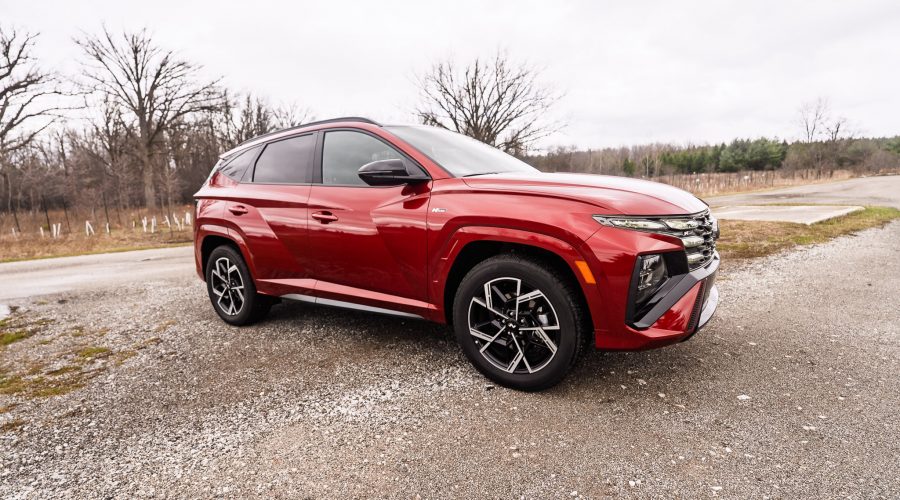
Let’s get one thing straight right out of the gate: the word hybrid in today’s automotive world is about as loosely defined as “lightly used” in the old newspaper classifieds. Every OEM has their own spin, their own tech, and their own marketing department trying to convince you theirs is the hybrid equivalent of sliced bread.
Hybrid vs. Mild Hybrid — Plain English Edition
Here’s the simplest way to break it down:
- Full Hybrid (like the Tucson Hybrid):
Think of it as a tag-team duo. The gas engine and electric motor can work together or independently. That means the vehicle can drive on electric power alone at low speeds, switch to gas when needed, and seamlessly bounce between the two. It’s efficient, clever, and frankly, what most people think a hybrid should be. - Mild Hybrid:
This is more like a helpful assistant than a co-worker. The electric motor doesn’t actually power the vehicle on its own. It just supports the gas engine—helping with fuel efficiency, smoothing out acceleration, and shutting the engine off at stops. You’re never really “driving electric.”
So no, the Tucson Hybrid is not pretending—it’s the real deal.
Fuel Economy: Strong…But Slightly Conflicted
The official rating for the Tucson Hybrid comes in at 6.7L/100km city and highway (≈37 MPG). On paper, that’s excellent for an AWD crossover that’s not exactly built like a featherweight marathon runner.
But here’s where I raise an eyebrow.
Typically, hybrids shine brightest in the city—stop-and-go traffic is where the electric motor does its best work. So seeing identical city and highway numbers feels a bit like a hockey player who’s equally good on ice and rollerblades…impressive, but slightly puzzling.
For context, the gas-only Tucson AWD sits at 8.7L/100km, so you’re saving roughly 2L/100km. That might not sound life-changing, but over a few years of commuting, road trips, and late-night Tim’s runs, it absolutely adds up.
The Cool Factor
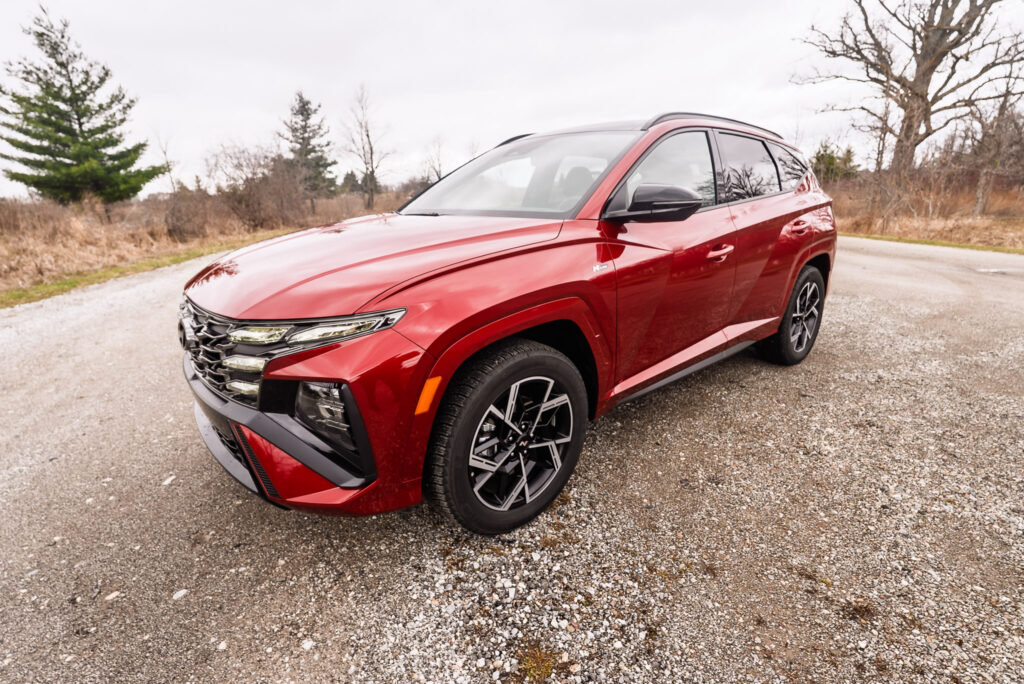
The tester: Ultimate Red Metallic, ringing in at $46,199 all-in before taxes. Not exactly pocket change—but there’s substance behind the style.
- The Power Plant
A 1.6L turbocharged 4-cylinder paired with an electric motor delivers 231 horsepower and 271 lb-ft of torque.
Translation? This Tucson moves.
- Quick off the line
- Confident highway passing
- Enough grunt for passengers, cargo, and even some light towing
It’s not a sports car, but it won’t embarrass you at a green light either.
- Screens, Screens, and More Screens
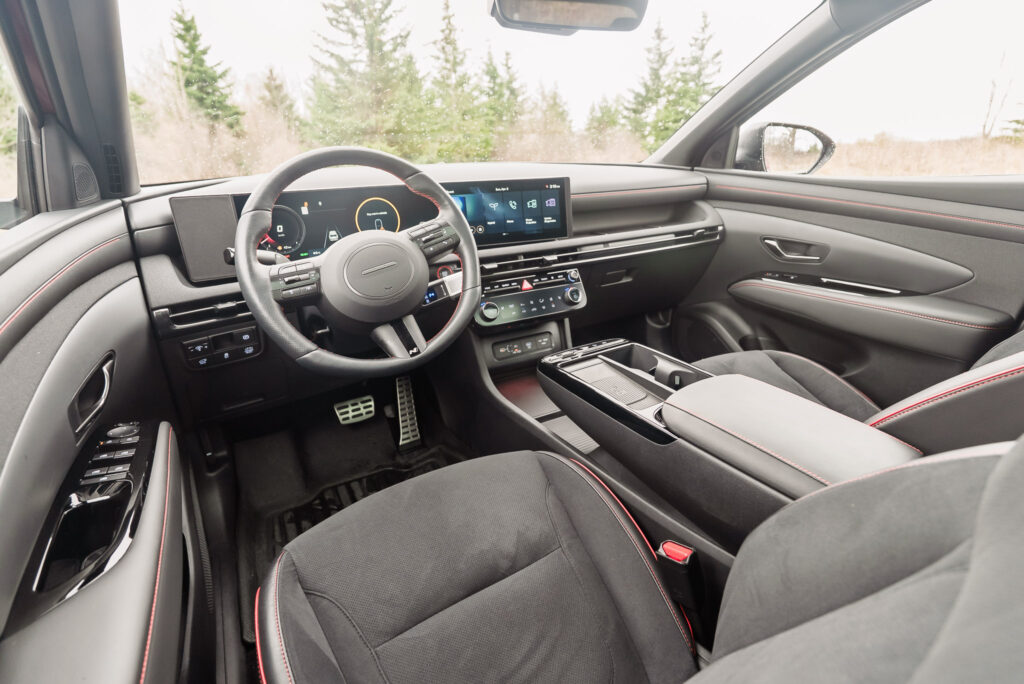
The dual 12.3-inch displays give the interior a modern, almost concept-car feel.
- Crisp, clean interface
- Intuitive controls (thankfully not over-engineered)
- A cabin that feels more upscale than the price suggests
And yes, the panoramic sunroof is a crowd-pleaser. Open it up and suddenly even your grocery run feels like a lifestyle upgrade.
- Space: Bring the Dogs (Both of Them)
This is where the Tucson quietly flexes.
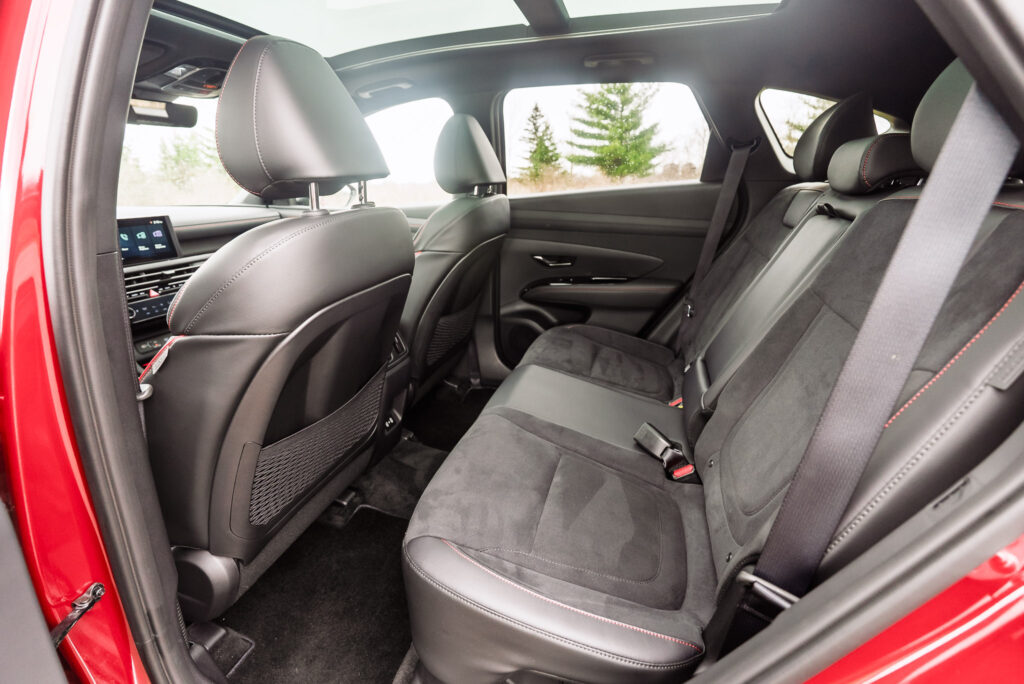
Passenger room? Generous.
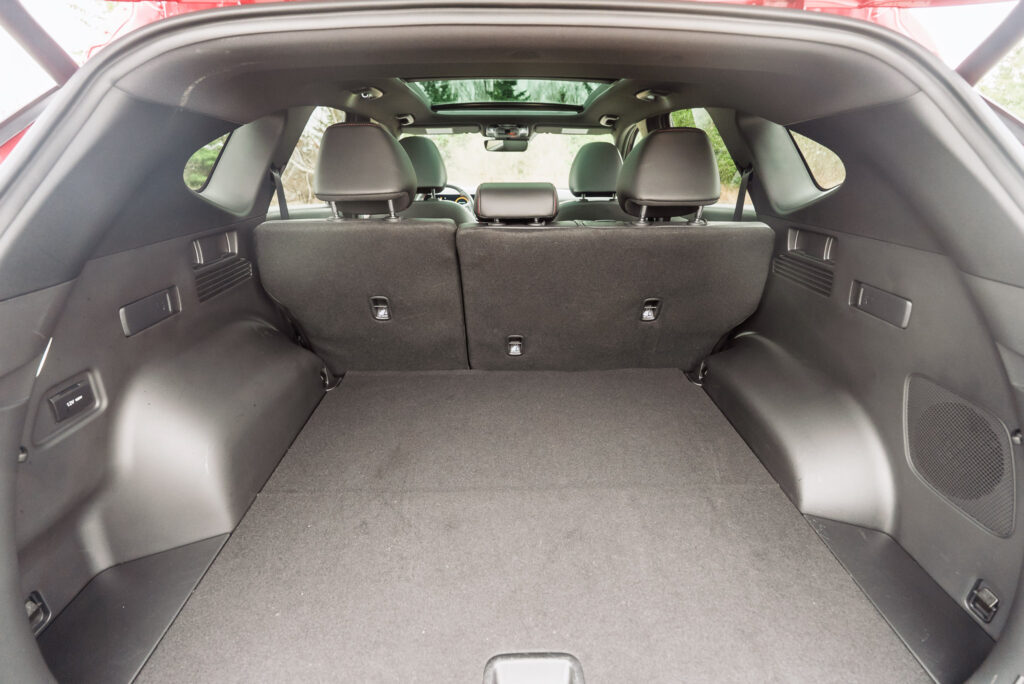
Cargo space? Surprisingly accommodating.
You can comfortably haul:
- Golf clubs
- Hockey gear
- Costco impulse purchases
- Or, as I like to measure capacity: two golden retrievers with zero attitude
Hyundai’s packaging team deserves a raise.
- Styling: Finally, Something Different
Let’s be honest—most crossovers look like they were designed by a committee that feared offending anyone.
Not this one.
The Tucson’s:
- Front end is bold, angular, and instantly recognizable
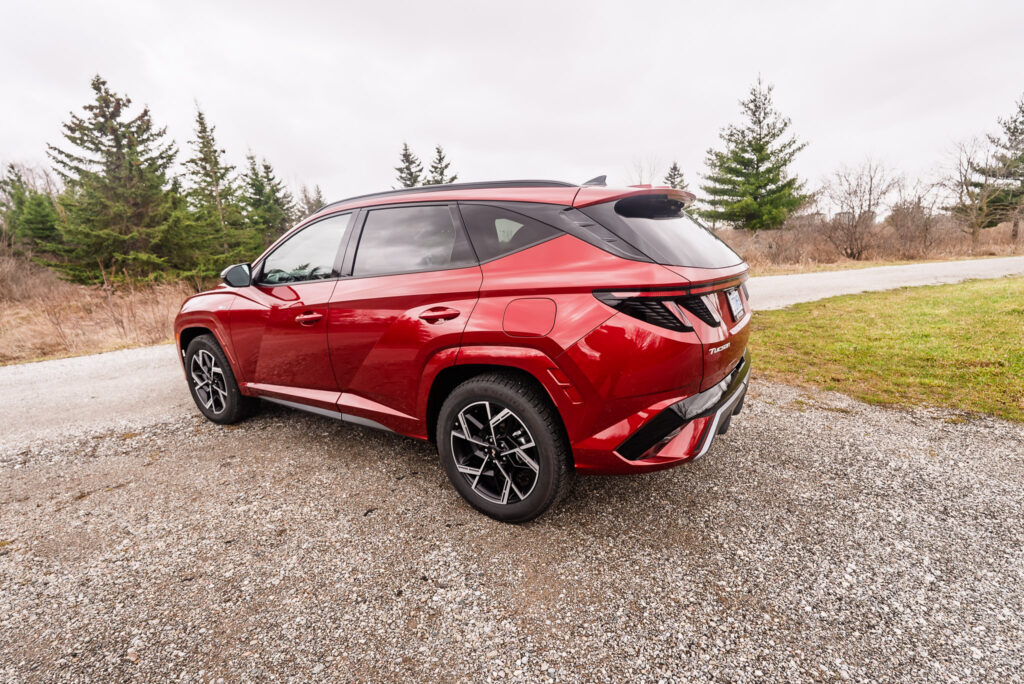
- Rear design is equally distinctive
- Side profile… okay, still a crossover, but we’ll allow it
It’s modern without being weird. That’s a tough balance.
Watch-Out For (The Not-So-Cool)
- Fuel Economy (Yes, Again)
That strong powertrain comes at a cost.
Competitors like the Honda CR-V Hybrid edge it out in city efficiency (around 6.0L/100km). It’s not a massive gap, but over time, it matters.
You’re essentially trading a bit of efficiency for performance.
- Blind-Spot Monitoring: Slightly Asleep at the Wheel
During my time behind the wheel, the blind-spot indicators felt… delayed.
Not broken. Not useless. Just not as quick to react as you’d expect.
And here’s the thing—these systems are meant to assist, not replace good driving habits. But once you start trusting them, even a slight hesitation can feel like a betrayal.
- Driving Dynamics: All Show, Some Go
This is where things get a little mismatched.
The N-Line badge and aggressive styling suggest something sporty. What you actually get is… comfortable.
“Spongy and floaty” might sound harsh, but here’s what it really means:
- Spongy: The suspension absorbs bumps well but lacks tightness. You don’t feel as connected to the road.
- Floaty: At higher speeds or through corners, there’s a bit of body movement—like the vehicle is gently gliding rather than carving.
It’s tuned for comfort, not corner carving. Which is fine—just don’t expect hot-hatch reflexes from something wearing running shoes.
- Pricing: So Close to Greatness
At just over $46K, the Tucson Hybrid offers solid value—but it doesn’t quite dominate the segment.
And that’s the missed opportunity.
CarCostCanada® is all about the “value equation.” Hyundai was one aggressive pricing move away from making this a no-brainer.
N-Line vs. Ultimate: Is the $4,000 Upgrade Worth It?
Moving from N-Line AWD ($43,799) to Ultimate AWD ($47,799) gets you:
- Ventilated front seats (a summer lifesaver)
- Heated rear seats (because Canada)
- Upgraded audio system
- More advanced driver-assist features
- 360-degree camera system
- Premium interior materials
In short, the Ultimate turns the Tucson from “very nice” to “borderline luxury-lite.”
If you plan to keep the vehicle long-term, the upgrade makes sense. If you’re leasing and watching payments, the N-Line already delivers most of the experience.
The Numbers Game (According to CarCostCanada & LeaseBusters)
- Lease: ~$503/month + tax
- 0 down
- 20,000 km/year
- 4.99%
- Finance: ~$637/month
- 84 months
- 4.29%
Not outrageous—but let’s be real: if Hyundai dropped rates into the 2.99% range, they’d have people lining up like it’s Black Friday at Best Buy.
And according to LeaseBusters, demand is already heating up—especially in the lease takeover market. Translation: people want in, and they’re willing to skip the new-car wait to get there.
The Competition
This is a tough segment—arguably one of the most competitive in the industry.
- Mazda CX-50 Hybrid – Slightly more driver-focused, a bit cheaper
- Honda CR-V Hybrid – Efficiency king, ultra-practical
- Kia Sportage Hybrid – Tucson’s corporate cousin, equally compelling
And a quick note: the Toyota RAV4 has moved away from traditional hybrids, now focusing on plug-in variants—which is a whole different conversation (and price bracket).
Final Verdict: Style, Substance, and a Bit of Swagger
The 2026 Tucson Hybrid N-Line AWD is a bit of a paradox—and I mean that in a good way.
It’s:
- Sporty-looking but comfort-focused
- Efficient but still powerful
- Practical but genuinely stylish
It doesn’t lead the class in every category, but it does something arguably more important: it balances them exceptionally well.
If Hyundai sharpens the pricing strategy and tightens up a few dynamics, this could easily be the segment leader.
As it stands?
It’s already on the shortlist—and for a lot of buyers, it might just be the one that checks the most boxes without trying too hard to impress.
And sometimes, that’s exactly what you want.
James Matthews is the President, General Manager and Co-Founder of LeaseBusters. James launched LeaseBusters in 1990 and is considered one of Canada’s leading experts on new-vehicle leases, lease takeovers, and vehicle lease (re)marketing. James can be reached directly at jmatthews at leasebusters.com