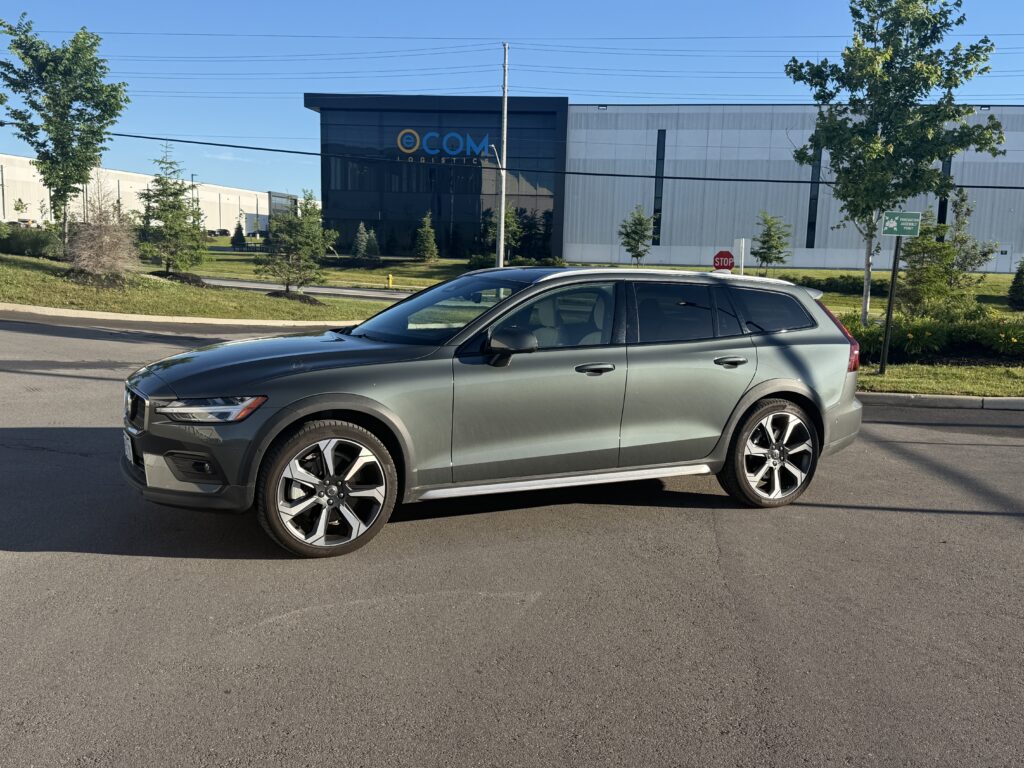
2026 Volvo V60 B5 AWD Ultra Review
I have a confession to make.
I really, really liked the 2026 Volvo V60 B5 AWD Ultra.
Wait… did I just admit that I enjoyed driving a station wagon? Am I officially at the age where I should be shopping for orthopedic shoes and discussing lawn fertilizer with the neighbours?
Actually, no.
Let’s be honest for a second. Aren’t today’s SUVs and crossovers really just station wagons that went to the gym, bought a pair of hiking boots and started calling themselves “adventure vehicles”? Raise them a few inches, add some black plastic wheel arch cladding, and suddenly nobody wants to admit they’re driving a wagon anymore. Throw another perspective into the mix and many SUVs are simply oversized five-door hatchbacks.
So let’s stop the station wagon discrimination.
Because this Volvo is terrific.
From the moment I climbed behind the wheel, the V60 felt refined, comfortable and unmistakably Swedish. It has that understated confidence that Volvo has perfected over the years. It doesn’t scream for attention like many German luxury competitors. Instead, it quietly whispers, “I know exactly what I am.”
And that’s cool.

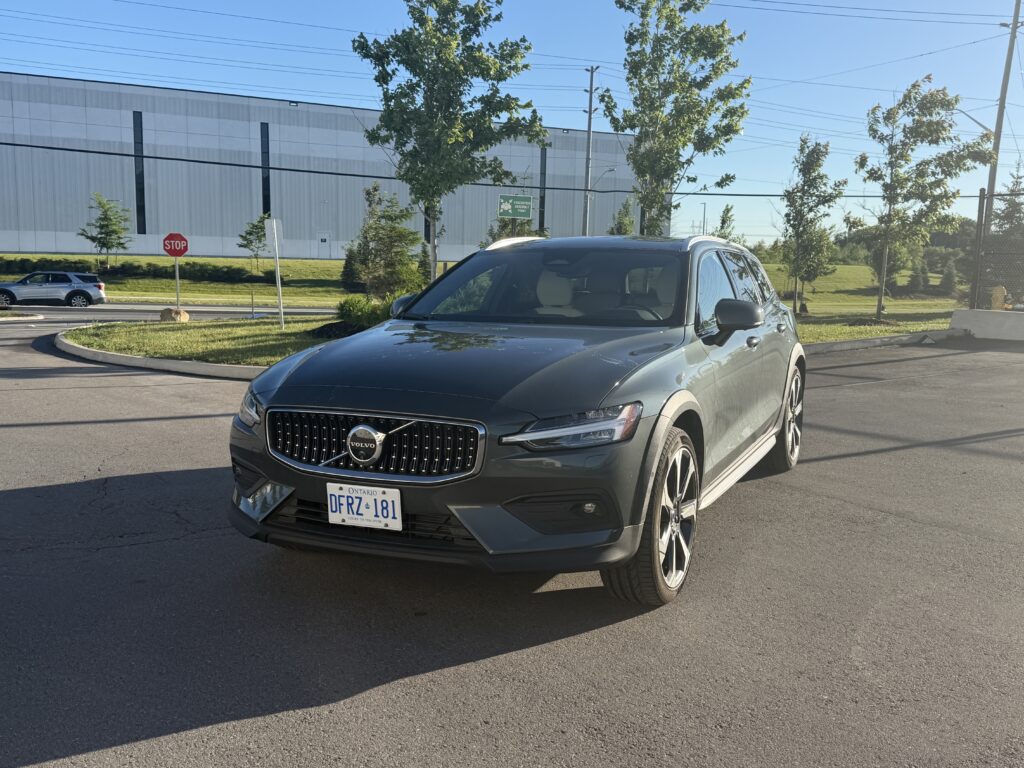
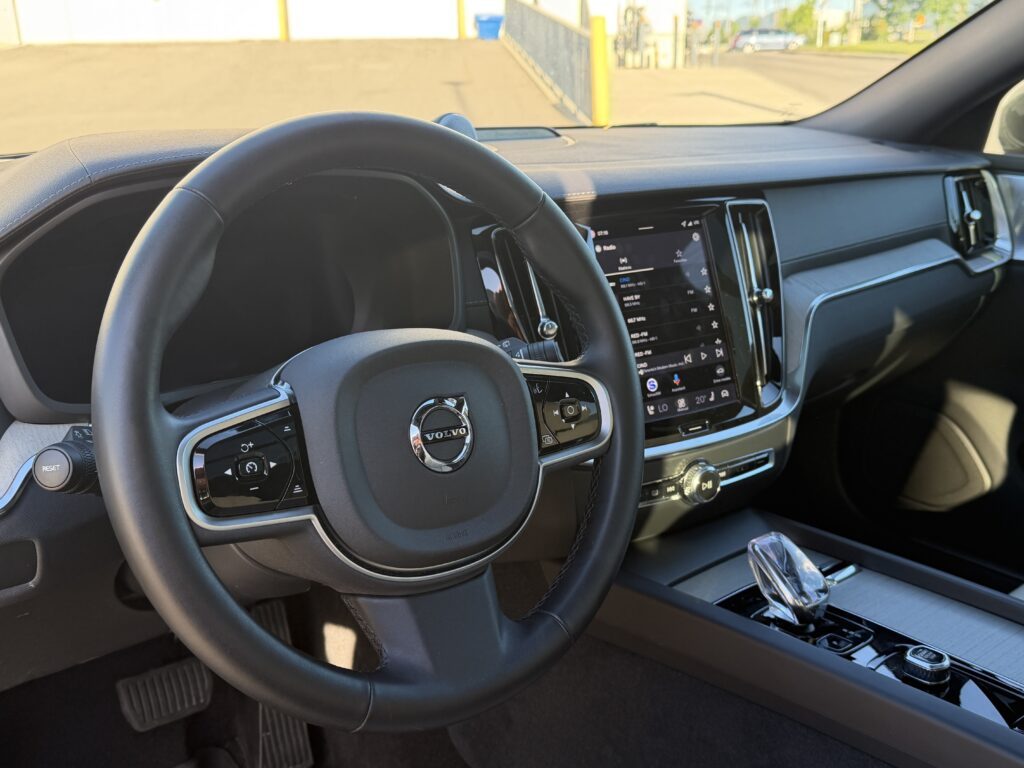
One Trim. One Price. One Big Mac.
Volvo Canada has made shopping for a V60 refreshingly simple.
There is one model.
One engine.
One trim level.
It’s almost like ordering a Big Mac. You don’t spend twenty minutes deciding between six different versions because there aren’t six different versions.
The 2026 Volvo V60 Cross Country B5 AWD Ultra starts with a base MSRP of $62,250. Add $2,150 for freight and the obligatory $100 air conditioning tax, and your total sticker comes to an even $64,500.
That’s it.
No complicated option sheets. No endless packages. No wondering whether you should have ordered Package A, B or C.
Volvo simply loads this thing with virtually everything you’d want.
Leather interior? Check.
Excellent safety technology? Naturally.
Premium materials? Absolutely.
All-wheel drive? Standard.
The V60 arrives fully equipped, which is becoming increasingly refreshing in a luxury market where adding a few desirable options can easily inflate the price by another $10,000.

What’s a B5 Anyway?
If you’re wondering what “B5” actually means, don’t feel bad—I had to look it up too.
The B5 designation refers to Volvo’s 2.0-litre turbocharged four-cylinder engine producing 247 horsepower, paired with a 48-volt mild-hybrid system.
Notice I said mild hybrid.
This isn’t a full hybrid that can silently drive around town on electric power alone. The electric system primarily assists the gasoline engine during acceleration, smooths out stop-start operation and helps improve fuel economy.
It’s clever technology.
I did, however, question why Volvo emphasizes the B5 designation when there’s only one available engine. It feels a little like putting “Medium Coffee” on a menu that only sells medium coffee.
Lease Payments… Ouch.
Now let’s discuss the elephant in the showroom.
The lease payment.
As someone who spends an unhealthy amount of time talking about lease economics, the approximately $930 per month plus tax payment over 48 months gave me a little heartburn.
That’s a substantial payment for a vehicle in this segment.
Interestingly, Volvo Canada’s financing rates don’t provide much relief either, with leasing and financing both sitting around 4.99%.
The leasing specialists at LeaseBusters pointed out that Volvo currently offers several stackable and non-stackable incentives on the V60, and I tend to agree with their suggested strategy. Rather than focusing on the manufacturer’s financing, I’d likely negotiate the strongest possible selling price, take advantage of whichever stackable and non-stackable incentives produce the greatest savings, and arrange leasing or financing independently if it results in a lower overall cost.
The pricing analysts at CarCostCanada echoed much of the same advice. Depending on inventory levels and sales performance, Volvo could strengthen its competitive position by becoming a little more aggressive with both leasing and financing rates. Lower monthly payments don’t just attract more buyers—they also leave room in the budget for protection products and extended warranties, something Volvo owners historically tend to appreciate because many keep their vehicles significantly longer than average.
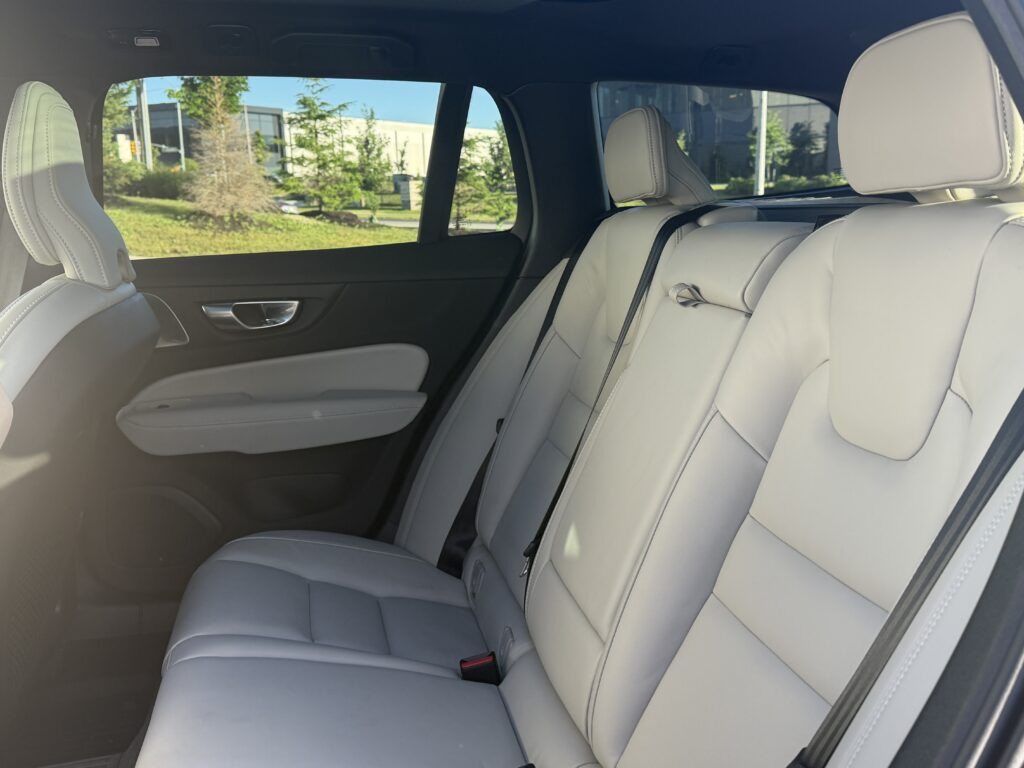
Why Buy the Wagon Instead of the SUV?
This is where the V60 really begins to shine.
The obvious alternative sitting just down the Volvo showroom is the incredibly popular XC60.
So why choose the wagon?
Simple.
Because it drives better.
The lower centre of gravity makes the V60 feel far more connected to the road. Cornering is flatter, steering response is sharper and body roll is dramatically reduced compared to most SUVs.
It simply feels athletic.
Then there’s the exclusivity factor.
You don’t see many premium wagons anymore.
Occasionally I’ll spot an Audi wagon, but beyond that they’re remarkably rare.
That scarcity actually becomes part of the appeal. The V60 stands out without trying too hard. It’s unique, tasteful and refreshingly different in a sea of nearly identical crossovers.
Ironically, I think this uniqueness actually lowers the average buyer age. Younger buyers often want something distinctive, while experienced buyers appreciate not driving what everyone else owns.
The V60 quietly delivers both.
Practicality hasn’t been sacrificed either.
Cargo capacity is remarkably close to Volvo’s XC60, it still offers standard all-wheel drive, benefits from better aerodynamics, produces less wind noise and generally delivers better fuel economy.
Considering Canadian fuel prices seem permanently allergic to staying low—especially whenever geopolitical tensions begin making headlines around the Strait of Hormuz—that efficiency advantage certainly isn’t insignificant.
Where Volvo Missed the Mark
As much as I enjoyed the V60, there are still a few areas where Volvo could improve.
Performance
The 247-horsepower engine is perfectly adequate, but that’s about as far as I’d go.
For a premium wagon with sporting aspirations, I’d happily welcome another 40 or 50 horsepower. Highway passing requires more planning than I’d like, and the vehicle never feels genuinely quick.
The Interior Technology
While Volvo’s cabin remains beautifully designed, the interface is beginning to show its age.
There’s something charming about its minimalist Scandinavian layout but imagine how spectacular this wagon would feel with Volvo’s latest-generation digital interface, faster processing and a more playful user experience.
And while we’re making wishes…
Wireless Apple CarPlay and Android Auto should simply be standard by now.
Enough with the cables already.
Towing Capacity
The maximum towing capacity of just 2,000 pounds limits the V60’s versatility.
If you own a small utility trailer, a teardrop camper or a pair of Sea-Doos, you’re probably pushing close to the limit.
An extra thousand pounds would have made the V60 a much more capable recreational vehicle and allowed it to compete more directly with its XC60 sibling.
Pricing
Finally, there’s the sticker price.
The comparable 2027 Volvo XC60 B5 AWD Plus lists for approximately $67,630 – (ha, there’s that B5 again!!)
When the SUV is only a few thousand dollars more, some buyers may understandably choose the higher-riding crossover simply because that’s where the market has gravitated.
Perhaps pricing the V60 a little more aggressively would encourage more buyers to rediscover just how enjoyable premium wagons really are.
And so…….
The 2026 Volvo V60 B5 AWD Ultra won’t be Canada’s volume-selling luxury vehicle.
And that’s exactly why I like it.
It’s elegant without being flashy. Practical without being boring. Comfortable without feeling disconnected. It delivers nearly all the utility of an SUV while rewarding the driver with handling, efficiency and road manners that many crossovers simply can’t match.
Yes, I’d like more power.
Yes, I’d like a more modern infotainment system.
And yes, I’d absolutely like a lower lease payment.
But every time I walked away from the V60, I found myself turning around for one last look.
That’s usually a pretty good sign.
Maybe station wagons never disappeared after all.
Maybe we just forgot how good they could be.
James Matthews is the President, General Manager and Co-Founder of LeaseBusters. James launched LeaseBusters in 1990 and is considered one of Canada’s leading experts on new-vehicle leases, lease takeovers, and vehicle lease (re)marketing. James can be reached directly at jmatthews at leasebusters.com